What is the issue?
When most people think of tidal power they envision a traditional design in which a barrage, or dam, impounds the waters of high tide in an estuary and then later releases those waters through a turbine. This is what is happening in the Rance River in France, in the Annapolis River in Nova Scotia, and most recently at the Sihwa Lake project in South Korea. But that design will only work in places with exceptionally high tides. The dams also completely alter the ecology of estuaries where they are located and so have been avoided in most places in recent years.
In South Korea, the only tidal power plant built, as of 2011, is the Sihwa Tidal Power Plant (TPP) located approximately 20km from Incheon. The Sihwa TPP opened in August of 2011 and has a capacity of 254 megawatts (MW), making it the largest tidal power plant next to France’s Rance Tidal Power Station with 240 MW. This tidal power plant was build due to South Korea’s president Lee Myung-bak’s promise to address alternative energy progress by 2015.
Despite the good intentions of this project, there is disagreement on the actual “green-ness” of this method and controversy on the problems it may create. With 2,800 people making a living off of fishing, the tidal power plants may disrupt their way of life. It is believed that the Sihwa TPP may damage the ecosystem by manipulating the tides. With a damaged ecosystem, fishermen would bring in smaller catches and there would be a decline in marine life.
In South Korea, the only tidal power plant built, as of 2011, is the Sihwa Tidal Power Plant (TPP) located approximately 20km from Incheon. The Sihwa TPP opened in August of 2011 and has a capacity of 254 megawatts (MW), making it the largest tidal power plant next to France’s Rance Tidal Power Station with 240 MW. This tidal power plant was build due to South Korea’s president Lee Myung-bak’s promise to address alternative energy progress by 2015.
Despite the good intentions of this project, there is disagreement on the actual “green-ness” of this method and controversy on the problems it may create. With 2,800 people making a living off of fishing, the tidal power plants may disrupt their way of life. It is believed that the Sihwa TPP may damage the ecosystem by manipulating the tides. With a damaged ecosystem, fishermen would bring in smaller catches and there would be a decline in marine life.
how has it affected the world?
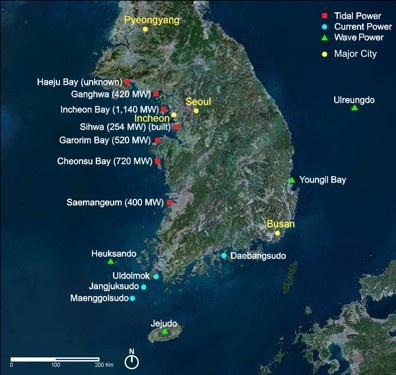
Figure 1.South Korea’s plans for ocean energy generation, showing capacities of tidal power plants.
|
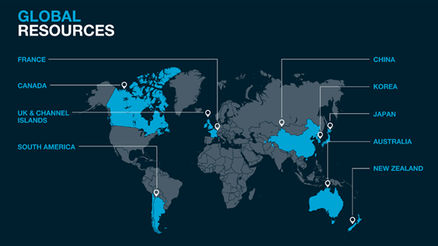
Figure 2. Countries like Japan, Korea, Canada, and England have some of the largest marine energy resources in the world. England itself represents about 50 percent of its tidal energy resource capacity.
|
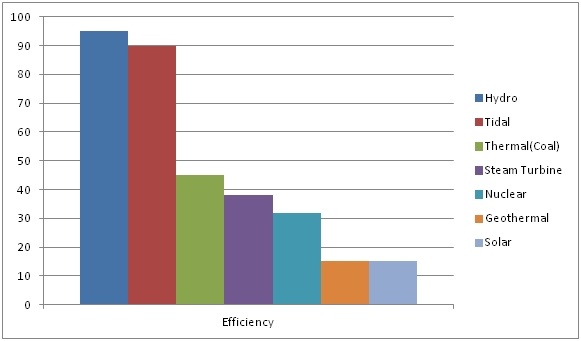
Figure 3. This graph shows how Tidal Energy is the second most efficient alternative energy source.
1. (Haeju Bay Tidal Power Plant would be located in North Korean territory; its capacity is not available.) © Ko, Schubert, and Hester
2. "Marine Current Turbines." Tidal Energy. N.p., n.d. Web. 27 Feb. 2015. <http://www.marineturbines.com/Tidal-Energy>.
3. N.p., n.d. Web. <http%3A%2F%2Fengineering.electrical-equipment.org%2Fothers%2Fyear-2050-in-terms-of-electrical-power-scenario.html>.
2. "Marine Current Turbines." Tidal Energy. N.p., n.d. Web. 27 Feb. 2015. <http://www.marineturbines.com/Tidal-Energy>.
3. N.p., n.d. Web. <http%3A%2F%2Fengineering.electrical-equipment.org%2Fothers%2Fyear-2050-in-terms-of-electrical-power-scenario.html>.
